
Reviewed · WALKING TOURS
2.5 Hour Football Walking Tour in Glasgow
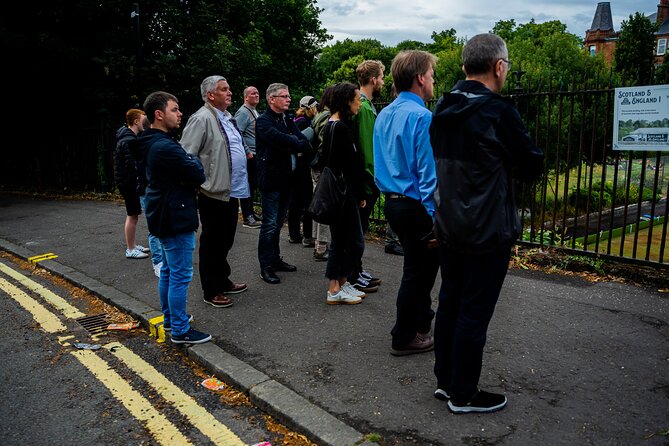
Football did not simply arrive in Glasgow fully formed. This walking tour follows the places where Scottish players helped shape the passing and running game, from Queen’s Park Recreation Ground through the three Hampden Parks. The most striking stop is Cathkin Park, an abandoned stadium where original terracing still survives.
I like the tour’s clear football focus and its route through real historic sites rather than a museum display. I also like the personal storytelling promised by the local guide, including triumphs, failures, and the Rose Reilly mural. The main consideration is that this is an outdoor walking tour, with no private transport and possible weather-related changes.
Key points to know before you book
- Four important football locations: Visit Queen’s Park Recreation Ground, the first Hampden Park, Cathkin Park, and today’s Hampden Park.
- A story about football’s beginnings: Learn how Scottish football helped shape the modern passing and running game.
- The first Hampden mural: See the mural marking Scotland’s 5 to 1 victory over England on 11 March 1882.
- Abandoned Cathkin Park: Walk beside original stadium terracing at the second Hampden Park.
- Small group size: The tour accepts a maximum of 20 people, keeping the walk more personal than a large coach excursion.
- Simple logistics: It starts at 10:30 am on Queen’s Drive and finishes at Hampden Park. You arrange your own way to the start and from the finish.
Why Glasgow is the right place to study football
Glasgow is not just a city with famous clubs and a national stadium. It is also one of the places where the modern game took shape. This tour makes that point by taking you to the grounds linked with Queen’s Park and the Hampden name.
The central idea is that Scottish football helped develop a passing and running style that later spread around the world. The tour connects that sporting change to actual pieces of ground, old terraces, murals, and stadium sites. That makes the story easier to grasp than a string of dates in a display case.
I like this approach because it gives you a sense of football as a local invention and a social activity. You are not only hearing about famous matches. You are following the physical spaces where clubs played, adapted, succeeded, and sometimes disappeared.
The experience is offered in English and led by a passionate local guide. The guide’s role matters here. The story includes the birth of the game, its modernisation, major successes, and painful failures. A dry account of old grounds would not be enough, but an engaging storyteller can turn each stop into part of one connected narrative.
More Walking Tours in Glasgow
- Glasgow City Centre Walking Tour with Local Guide
★ 5.0 · 1,326 reviews - Glasgow Street Art Daily Walking Tour: 2pm
★ 5.0 · 648 reviews - Gander Walking Tours in Glasgow
★ 5.0 · 506 reviews
Queen’s Park Recreation Ground begins the story
The walk starts at 16 Queen’s Drive, Glasgow, at 10:30 am. The first stop is Queen’s Park Recreation Ground, described as part of the cradle of the modern passing and running game.
This is an important opening because it puts the earliest part of the story before the stadiums. You begin with the setting linked to Queen’s Park and the development of a style of play that became influential far beyond Scotland.
The tour is not presented as a general city walk with a little football added. Football is the subject from the first stop. If you want a broad introduction to Glasgow’s architecture, music, or social history, this is not the right tour. If you want to understand the city through the game, the focus is a strength.
At this point, listen for the explanation of how football changed over time. The tour’s purpose is to show how the game moved from its early form toward the organised sport watched across the world today. The guide is expected to link the places you see with that wider change.
First Hampden Park and the 1882 mural
The next location is the Hampden Bowling Club, identified as the site of the first Hampden Park. Here, you see the first Hampden mural, which records Scotland’s 5 to 1 win over England on 11 March 1882.
That mural gives the early story a precise date and a memorable result. It is more useful than hearing only that a ground was important. You can connect the location with a particular match and with the growing importance of international football.
The site also shows how much Glasgow’s football story has changed. A football ground from the early period is no longer simply functioning as the same kind of sporting venue. The tour uses the surviving setting and mural to explain what came before modern stadium design.
I would pay close attention here to the guide’s match context. The supplied details identify the score and date, but not the full match story, so the guide’s explanation is likely to add the human side: what the result meant, how the game was played, and why it mattered in the development of Scottish football.
This stop should appeal to anyone who enjoys football records, but you do not need to know old results in advance. The route is designed to explain the significance of the place as you go.
Cathkin Park reveals what time leaves behind
Cathkin Park is the most unusual stop on the route. It was the second Hampden Park, and the site now contains an abandoned stadium with original terracing.
That changes the mood of the walk. The first Hampden stop is marked by a mural and a named club setting. Cathkin Park gives you a physical reminder of decline. Old terracing can show the scale and shape of a stadium in a way that a modern arena cannot.
For me, this is likely to be the most rewarding part for anyone curious about football grounds. A working stadium is polished and carefully managed. An abandoned one makes you think about the clubs, crowds, matches, and decisions that once gave it purpose.
The trade-off is that an old ground may not offer the neat, finished experience some people expect from a paid attraction. You should approach Cathkin Park as a historic site within a walking story, not as a full stadium tour with extensive facilities.
The guide’s explanation is especially important here. Without context, old terraces might look like little more than weathered masonry. With the story of the second Hampden Park, they become evidence of how football venues rise, change, and sometimes fade away.
Same base, a completely different sort of day:
- Guided Celtic Park Stadium Tour
★ 5.0 · 3,136 reviews - City Sightseeing Glasgow Hop-On Hop-Off Bus Tour
★ 4.5 · 1,873 reviews - Oban, Glencoe, Highlands Lochs & Castles Small Group Day Tour from Glasgow
★ 5.0 · 1,432 reviews - Loch Ness & the Highlands Day Tour from Glasgow Including Cruise
★ 5.0 · 1,211 reviews
Third Hampden Park and the Rose Reilly mural
The walk ends at Hampden Park, the third stadium to carry the name. The modern ground gives the tour a clear final chapter and brings the story into the present.
You also see the Rose Reilly mural. Her inclusion broadens the tour beyond a narrow account of men’s international football. It gives the route another human story and points to the wider range of people who have shaped Scottish football.
The tour details do not specify an inside visit, stadium admission, or a match-day experience. Plan on seeing Hampden Park as the final location of the walking route, not on entering the stadium unless that is separately arranged. Admission is not included.
Finishing at Hampden is practical as well as symbolic. You move from early recreation grounds and historic sites to the current national stadium. The route ends with a working landmark rather than leaving the story in the past.
What the 2.5-hour format means
The experience lasts about 2 hours and 30 minutes, although the tour description also refers to two hours with the guide. I would allow the full 2.5-hour window when planning your day. That gives you room for walking, stops, and explanations without booking something immediately afterward.
This is long enough to tell a proper story, but short enough to fit into a day of sightseeing in Glasgow. You will spend the time outdoors and on foot, so comfortable shoes and clothing suited to the weather are sensible choices.
The tour requires good weather. If poor conditions force a cancellation, you are offered another date or a full refund. That policy is useful, but the outdoor nature of the experience remains a practical concern. Check the forecast and avoid treating this as a guaranteed indoor backup plan.
The tour has a maximum of 20 people. That is a reasonable group size for a walking route. You should be able to hear the guide more easily than in a large group, while still having the shared energy that suits a football story.
The price and what you receive for $33.94
At $33.94 per person, the tour is priced as a guided specialist walk rather than a simple stroll around Glasgow. The value depends on your interest in football and on how much you want the background explained.
You are paying for the route, the guide, and the connected story across four football locations. You are not paying for private transport, and admission is not included. That means the price works best if you value interpretation and access to places you might not understand fully on your own.
I think the cost is reasonable for a football fan who would otherwise walk past the sites without knowing their importance. The guide adds the key value by connecting the first Hampden, Cathkin Park, and the current Hampden into one narrative.
The price may feel less attractive if you are mainly seeking entry to a stadium or an inside-the-ground tour. Nothing in the supplied details promises that. Book this for the history and the walk, not for a behind-the-scenes stadium visit.
Getting there and leaving from Hampden Park
You need to make your own way to the starting point at 16 Queen’s Drive, Glasgow G42 8BS. The tour ends at Hampden Park on Letherby Drive, Glasgow G42 9BA.
Private transportation is not included. The meeting information notes that the area is near public transportation, which makes the start easier to reach without arranging a car. You should still check your route before the 10:30 am start, especially if you are unfamiliar with Glasgow.
The end point is Hampden Park, not the original meeting point. That matters when planning the next part of your day. You can continue sightseeing from the stadium area, use public transport, or make your own onward arrangements.
The walk format also means you should arrive ready to stay with the group. The tour is not designed around a coach carrying you between stadium sites. The movement between locations is part of the experience and helps show how the football story is spread across the area.
Who will get the most from this walk
This tour suits football fans who want more than a stadium photograph. It is also a good fit for visitors who like local history, old sporting grounds, and stories about how ordinary places gain importance.
You do not need to arrive with detailed football knowledge. The tour is intended to explain the game’s origins, development, successes, and failures. A strong interest in the subject will make it more enjoyable, but the structure gives newcomers a way into the story.
The tour may also suit families with older children who already care about football. The 2.5-hour length requires some attention and walking, so it is less suitable for anyone who wants a short photo stop or a fully seated activity.
It is not the best choice for a visitor seeking a general Glasgow introduction. You will not be covering a wide range of city sights. This is a focused football history walk, and that narrow purpose is both its appeal and its limitation.
Service animals are allowed, and most people can participate. The available information does not give a detailed route description or surface information, so anyone with specific mobility needs should confirm the walking arrangements before booking.
Booking, cancellation, and weather planning
You receive confirmation when you book. The tour can be cancelled for a full refund if you cancel at least 24 hours before the start time. Changes or cancellations made within 24 hours are not accepted for a refund.
The experience also requires a minimum number of participants. If that minimum is not met, you are offered another date or experience, or a full refund.
The weather rule deserves attention. Since the tour takes place outside, poor weather can lead to a different date or a full refund. Keep your plans flexible if this is a key part of your Glasgow day.
My verdict on the Glasgow football walk
I like this experience because it treats football as part of Glasgow’s physical story. The route moves from Queen’s Park Recreation Ground to the first Hampden, the abandoned terraces of Cathkin Park, and the third Hampden Park. Each place contributes something different.
The strongest feature is the contrast between the sites. The 1882 mural gives you a fixed moment of early international football. Cathkin Park shows what remains after a stadium’s active life has ended. Hampden Park brings the story to the present, while the Rose Reilly mural adds a wider human dimension.
The main drawback is simple: you are outdoors, walking, and arranging your own transport. You should also remember that admission is not included and that an indoor stadium visit is not promised.
Book this tour if you want football history explained on location, especially if the names Queen’s Park, Hampden Park, and Cathkin Park already mean something to you. Skip it if you want a broad Glasgow sightseeing tour or a stadium access experience. At $33.94, it offers fair value for a focused, story-led walk with a local guide and a maximum group of 20.
FAQ
Where does the football walking tour start?
The tour starts at 16 Queen’s Drive, Glasgow G42 8BS, UK.
What time does the tour start?
The stated start time is 10:30 am.
Where does the tour finish?
The walk finishes at Hampden Park on Letherby Drive, Glasgow G42 9BA.
How long does the tour last?
The experience lasts approximately 2 hours and 30 minutes. The tour information also refers to two hours with the guide, so allow the full 2.5-hour period.
What football locations are included?
The route includes Queen’s Park Recreation Ground, the Hampden Bowling Club site of the first Hampden Park, Cathkin Park as the second Hampden Park, and Hampden Park as the third stadium.
Is admission included?
Admission is not included. The provided information does not specify an included stadium entry.
Is transportation provided between the locations?
No. Private transportation is not included. This is a walking tour, and you arrange your own way to the starting point and from Hampden Park.
What language is the tour offered in?
The tour is offered in English.
Can I cancel for a full refund?
Yes, if you cancel at least 24 hours before the experience start time. Poor weather or failure to meet the minimum number of participants can also lead to another date or a full refund.
Just added around Glasgow
- Ultimate Day tour Edinburgh: Glencoe, Highland Cows, Loch Lomond★ 5.0 · 10 reviews
- West of Scotland Cultural Tour★ 5.0 · 7 reviews
- Magicians Heist Private Escape Room in Glasgow★ 5.0 · 23 reviews
- The Braveheart tour from Glasgow or Edinburgh★ 5.0 · 6 reviews
- Private Tour of Glasgow Distilleries and a Loch Lomond Cruise★ 5.0 · 13 reviews
- Scottish Highlands, Lochs & Castles from Edinburgh and Glasgow★ 5.0 · 6 reviews
- Loch Ness and the Scottish Highlands from Glasgow or Edinburgh★ 5.0 · 10 reviews
- Shore Excursion to Loch Lomond & Stirling Castle★ 5.0 · 10 reviews
Walking Tours, compared.
Underground Vaults Walking Tour in Edinburgh Old Town
Read our review →
Edinburgh Castle: Guided Walking Tour with Entry Ticket
Read our review →
Edinburgh Castle Guided Walking Tour in English
Read our review →
Edinburgh Darkside Walking Tour: Mysteries, Murder and Legends
Read our review →
Old Town Walking Tour History and Tales in Edinburgh
Read our review →
Haunted Vaults and Graveyard Walking Tour in Edinburgh
Read our review →Browse the lists this tour appears in