

Reviewed · WORKSHOPS
2 hour group lesson (3-16 people)
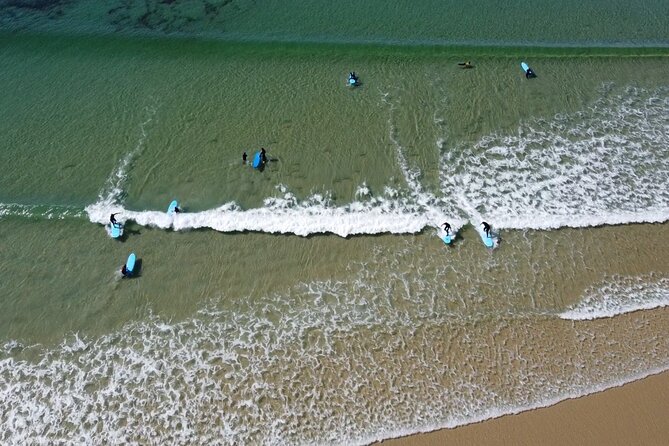
Catching a first wave at Dunnet Beach is a fine way to meet the North Sea: chilly, lively, and far more welcoming than its reputation suggests. You meet at the car park, pull on a cosy wetsuit, learn the basics on the sand, then spend most of the two hours in the water with an instructor close by.
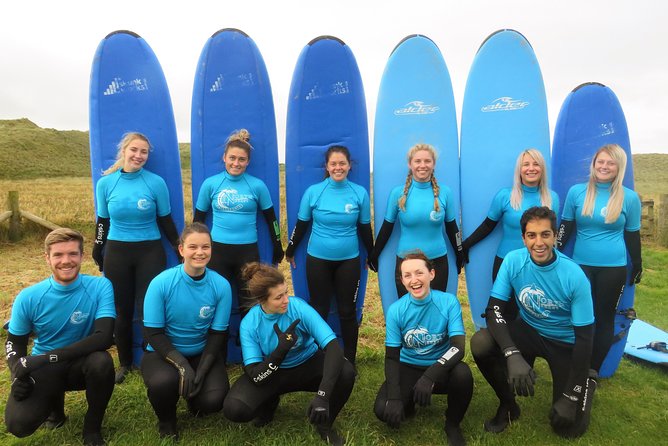
I like two things in particular. All equipment is included, so you do not need to build a surf kit before your holiday. I also like the patient, personal coaching from instructors such as Finn, Iona, and Jake, especially for children and older beginners.
The main drawback is simple: this is a weather-dependent outdoor lesson. Sea conditions may force a change of date, and the North Sea can still feel demanding even in a good wetsuit. Groups can reach 16 people, so the amount of individual help may vary.
Key points at a glance
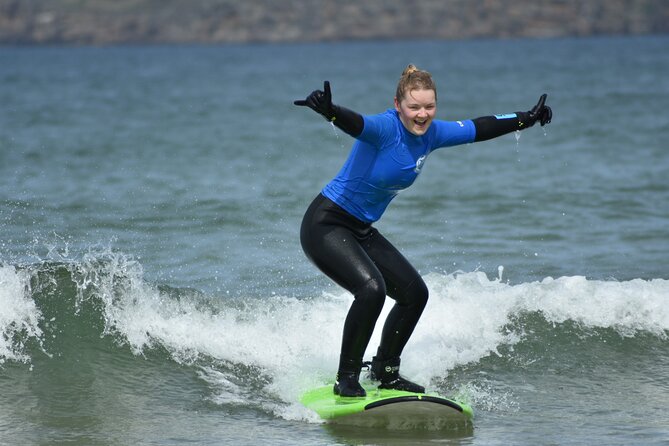
- Begin at Dunnet Beach car park: You meet at the listed location, get changed, and walk over the sand dunes to the beach.
- Everything for surfing is supplied: Your booking includes a wetsuit, surfboard, and lesson equipment.
- Two hours gives you time to learn: The session covers beach instruction, water practice, and repeated attempts at catching waves.
- Built for first-timers: Finn, Iona, Jake, and the wider North Coast Watersports team focus on clear instructions and encouragement.
- Good for families and mixed ages: Children aged 8, 9, 10, 11, and 12 have taken part, as has a beginner aged 64.
- The North Sea is part of the experience: Keep an eye out for seals and seabirds as you work on your balance.
Why Dunnet Beach makes a good first surf lesson
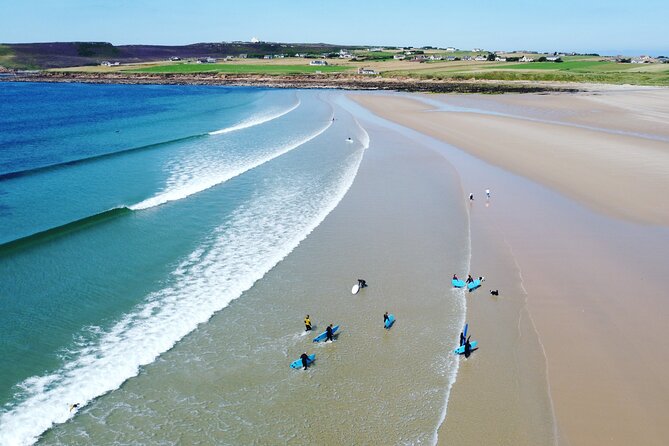
Dunnet Beach gives you a proper Scottish surf setting without making the day feel complicated. You arrive at one meeting point, collect your equipment, walk over the dunes, and begin learning on the sand. There is no separate transport between lesson sites and no long transfer eating into your two hours.
The setting matters. You are not practicing in a pool or on a calm indoor wave machine. You are learning in the North Sea, with open water, shifting waves, seabirds, and the chance of spotting seals. That adds a little uncertainty, but it also gives your first successful ride real meaning.
The lesson is aimed at beginners, and the teaching follows a sensible order. You get changed first, learn the key movements on the beach, then head into the water. That beach briefing is especially useful if you have never handled a surfboard before or are unsure how to time a wave.
More hands-on classes in Scotland:
- Eden Mill Edinburgh Love Gin Cocktail Masterclass
★ 5.0 · 88 reviews - 2 hour private surf lesson! (Up to 2 people)
★ 5.0 · 63 reviews - Wildlife Watching Safari by Vehicle & Walks / Photography workshops with a Guide
★ 5.0 · 49 reviews
Getting ready in the car park
Your session starts at the Dunnet Beach car park, listed at JM83+4M Dunnet, Thurso, UK. The activity also finishes there, so you do not need to arrange a separate end point.
North Coast Watersports provides the wetsuits, boards, and other equipment. That keeps your preparation fairly light. You can arrive without a surfboard and without knowing which type of board or wetsuit would suit a beginner. The supplied wetsuit is described as cosy, an important point when you are spending time in northern Scottish water.
After changing, the group walks across the sand dunes to the beach. This short walk is part of the setup rather than a separate sightseeing stop. You may want to keep your arrival simple and avoid carrying anything you do not need down to the shore.
The booking is a group experience for 3 to 16 people. A smaller group should make it easier to get direct help, while a full group may mean you spend some time watching others take their turn. The teaching is designed to include personal tips, but the precise amount of one-to-one attention depends on group size and sea conditions.
Learning the basics on the sand
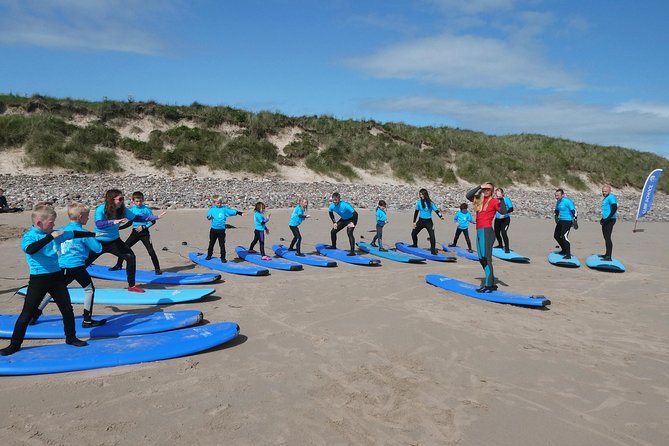
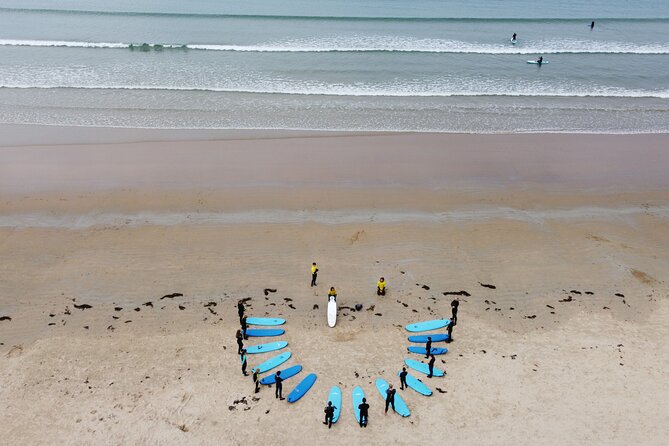
Before anyone sends you into the waves, the instructors explain what to do on the beach. You learn the body position and movement needed to get from lying on the board to standing. This dry practice gives you a chance to understand the sequence before adding cold water and moving surf.
That preparation is where the lesson earns its beginner-friendly reputation. You are not expected to work everything out through trial and error. Instructors such as Finn and Iona are described as patient and encouraging, while Jake has worked particularly well with family groups and younger children.
The teaching style seems to focus on simple instructions and repeated attempts. That is useful because surfing has several small steps: positioning the board, paddling at the right moment, pushing up, finding your balance, and staying relaxed when the board moves beneath you.
You should not expect to master every part of surfing in one session. A good result may be standing briefly, catching a small wave, or simply learning how to handle the board safely. Some people will progress quickly, while others will spend more time practicing the first movements.
Heading into the North Sea
Once the beach instruction is complete, you head into the water. The instructors guide you toward suitable waves and help you decide when to paddle. Their role is practical and active, not just a quick explanation followed by a distant watch from shore.
Finn is praised for staying close and giving clear direction, including telling beginners when to start paddling. That kind of timing help can make a big difference. A new surfer often knows what to do in theory but cannot yet tell which wave is worth taking or when to begin moving.
The water portion lasts long enough for several tries. You may get up, lose your balance, try again, and slowly begin to recognize how the board responds. A two-hour session is a better choice than a short taster if you want a fair chance to make progress. The first attempts can take time, and the lesson does not end just as you begin to understand the basics.
There is also a good balance between instruction and fun. You receive tips, but you are still out in the water enjoying the waves. The North Sea provides the scenery and the challenge, while the instructors help keep the session manageable.
A few more Scotland half-days worth weighing up
- Loch Ness and Caledonian Canal 2-Hour Cruise from Dochgarroch
★ 4.5 · 1,158 reviews - Inverness Bike Tour a 2 hours guided bike tour around the Waterways of Inverness
★ 5.0 · 440 reviews - Edinburgh 2 Hour Nighttime Ghost Tour Italian Tour Guide
★ 5.0 · 53 reviews - 2 hour Gin School Experience in Aberdeen
★ 5.0 · 19 reviews
How hard is the lesson?
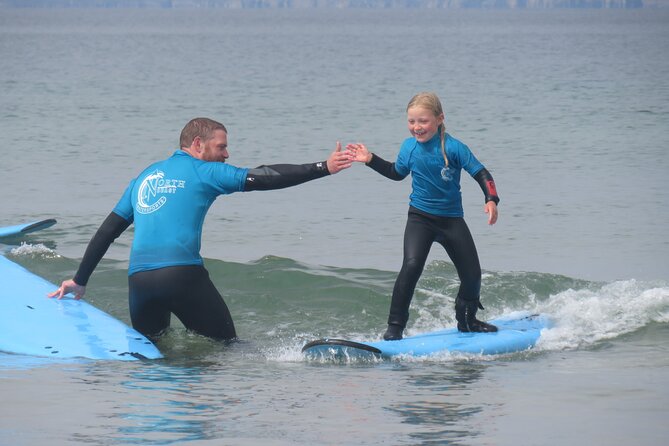
Surfing is physical work, even at beginner level. You will paddle, push yourself up repeatedly, brace against waves, and spend time balancing on a moving board. One beginner described two hours as tiring, which is a useful warning for anyone expecting a gentle sightseeing activity.
You do not need to arrive as an athlete. The experience is presented as suitable for most people, and the age range in the feedback is broad. Children aged 8 and 9 have taken part, as have children aged 10, 11, and 12. A 64-year-old beginner also learned to surf during the session.
That does not mean every person will find it equally easy. Your comfort in the water, general fitness, balance, and the conditions on the day all matter. If you are nervous, tell the instructor at the start. The strongest feature of this lesson is the encouragement, so use it.
The supplied information does not give a minimum age, swimming requirement, or detailed medical guidance. If you have a health concern or are booking for a child, contact North Coast Watersports before reserving. The stated information says most people can participate and that service animals are allowed.
A good choice for families
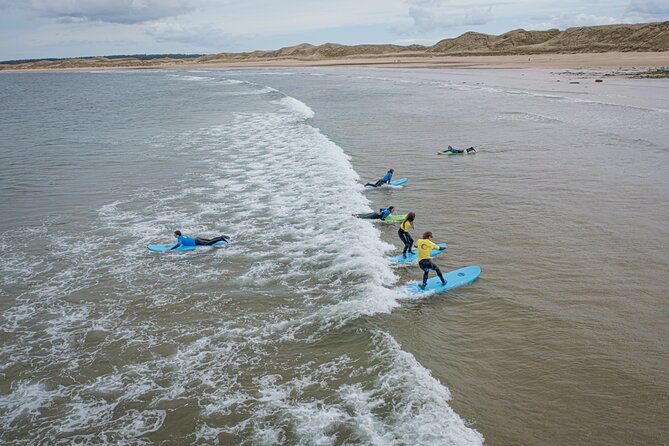
This lesson has a strong family angle. Children have been able to stand on the board during their first lesson, and instructors have been praised for offering the right level of support without making the session feel intimidating.
For a family of five, the lesson can become a shared challenge rather than a set of separate activities. Everyone has the same basic task, but each person can progress at a different pace. Younger children may need more encouragement, while an adult beginner may appreciate direct help with timing and balance.
The group format can also work well for siblings or friends. You will see other people learning, falling, trying again, and improving. That can take the pressure off. Nobody expects perfect technique on a first attempt.
Still, families should remember that a group of up to 16 is not a private lesson. If individual coaching is your priority, ask about group size before booking. The experience includes personal tips, but a larger class naturally spreads instructor attention across more people.
What makes the instructors important
The equipment gets you onto the beach, but the instructors shape the day. The names Finn, Iona, and Jake come up in the supplied comments, each linked with patience, clear teaching, and a friendly approach.
Finn is particularly associated with calm encouragement and close guidance in the water. Iona has taught alongside him and is described as welcoming and supportive. Jake has worked with families and helped children aged 8, 10, and 12 catch waves.
That matters because surfing can become frustrating very quickly. You may paddle too late, fall off just as the board starts moving, or lose your balance after standing. A good instructor keeps the correction short and useful, then gives you another chance.
The teaching also seems to suit people who arrive with different levels of confidence. One person booked at short notice and felt nervous. Another had wanted to try surfing for years and took the lesson at 64. You do not need to arrive with a bold, sporty personality. You need to be willing to listen, try, and get wet.
Wildlife, views, and the feel of the beach
The main attraction is the surfing, but the setting gives the lesson extra appeal. You are out on the North Sea rather than simply looking at it from a viewpoint. Between attempts, you may spot seals or seabirds.
Wildlife sightings are never guaranteed, so treat them as a bonus rather than a promised part of the session. The beach, dunes, open water, and northern light still give the lesson a strong sense of place even if the animals stay out of sight.
This is also a useful activity for a North Coast Scotland itinerary because it gets you moving. You are not just ticking off another viewpoint from the car. You spend two hours taking part in something tied directly to the coast.
The tradeoff is comfort. Weather and waves affect the experience, and even good conditions can feel brisk. Bring the attitude that the sea is in charge. The wetsuit helps, but it does not turn the North Sea into a warm swimming pool.
Is the $69.45 price good value?
At $69.45 per person, the price includes the wetsuit, surfboard, other lesson equipment, beach instruction, and roughly two hours of coaching. That is solid value if you are starting from scratch and would otherwise need to rent equipment and pay for instruction separately.
The length is important. A one-hour session could end just as you begin to understand how to catch a wave. Two hours gives you time to get changed, learn on the sand, practice in the water, receive corrections, and try again.
The value is strongest for first-timers and families. You are paying for access to equipment and for an instructor who can shorten the learning curve. It is less compelling if you already surf confidently and only need board hire, since this is a structured lesson rather than an open rental.
Weather can affect the value in another way. If poor conditions force cancellation, you are offered a different date or a full refund. That protects your payment, though it can still disrupt a tightly planned holiday schedule.
Timing, cancellation, and practical planning
The activity lasts about two hours, but allow extra time around it for arrival, changing, and the walk from the car park over the dunes. The exact meeting point is the Dunnet Beach car park, and the session ends back there.
You receive confirmation when you book. The experience is offered in English, uses a mobile ticket, and has a maximum group size of 16. Free cancellation is available if you cancel at least 24 hours before the local start time.
Cancellations made within 24 hours are not refunded, and late changes are not accepted. The minimum number of people also matters. If the session does not reach that minimum, you are offered another date or experience, or a full refund.
Because the lesson depends on good weather, leave some flexibility in your schedule if you can. A spare day in northern Scotland can save you from losing the chance to surf when wind or sea conditions change.
Who should book this lesson?
I would point this experience toward several kinds of visitors:
- Families looking for an active shared memory
- Adults who have always wanted to try surfing
- Older beginners who want patient instruction
- Visitors touring the North Coast who want more than a photo stop
- Small groups of friends comfortable learning together
- Children who are excited by water sports and can take part under the provider’s guidance
You should think twice if you dislike cold water, want a private lesson, or need guaranteed calm weather. You should also avoid treating the session as a sightseeing cruise. The focus is learning to surf, and you will spend much of the time working rather than sitting back.
Should you book North Coast Watersports at Dunnet Beach?
Yes, if you want a real beginner surf lesson with equipment included and you can accept the uncertainty of the sea. The strongest reasons to book are the full two hours, active help from instructors such as Finn, Iona, and Jake, and the fact that the lesson works for a surprisingly wide range of ages.
I especially like that the experience does not hide the work involved. You will probably fall, get tired, and paddle harder than expected. But with patient coaching and enough time in the water, you have a genuine chance of standing on a board and catching a wave.
Book it if you are flexible about weather and ready to be a beginner. Skip it if you need a guaranteed schedule or a warm, low-effort activity. For a North Coast Scotland trip, this is a practical way to meet the sea on its own terms.
FAQ
Where does the surf lesson begin?
It begins at the Dunnet Beach car park at JM83+4M Dunnet, Thurso, UK. You get changed there, then walk over the sand dunes to the beach.
How long does the surfing experience last?
The lesson lasts approximately two hours. This includes instruction on the sand and practice in the water.
Is surf equipment included?
Yes. The booking includes a wetsuit, surfboard, and all equipment needed for the lesson.
How many people can join the group?
The group can include between 3 and 16 people. The activity has a maximum of 16 participants.
Is the lesson suitable for beginners and children?
Yes. The lesson is designed for beginners, and the provided information says most people can participate. Children aged 8, 9, 10, 11, and 12 have taken part, but no formal minimum age is given.
What happens if the weather is poor?
The experience may be canceled if the weather is unsuitable. You will then be offered a different date or a full refund.
Just added around Scotland
- ULLAPOOL PORT Cruise Ship Tour, Ardvreck Castle, Rocks & More★ 5.0 · 5 reviews
- Northern Islands RIB Tour★ 5.0 · 15 reviews
- Glenaladale Cruise – Great for wizard spotting!★ 5.0 · 70 reviews
- Full-Day Private Speyside Malt Whisky Trail Tour from Grantown-on-Spey★ 5.0 · 22 reviews
- 2 hour private surf lesson! (Up to 2 people)★ 5.0 · 63 reviews
- Dunrobin Castle Private Tour★ 4.0 · 4 reviews
- Guided Walks in Grantown-on-Spey★ 5.0 · 35 reviews
- Explore Glenfinnan – Adults★ 5.0 · 5 reviews
Workshops, compared.

Eden Mill Edinburgh Love Gin Cocktail Masterclass
Read our review →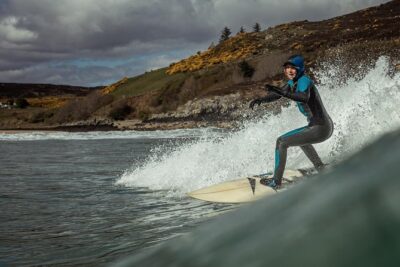

Wildlife Watching Safari by Vehicle & Walks / Photography workshops with a Guide
Read our review →
Edinburgh Photography Masterclass – Private Photography Lesson
Read our review →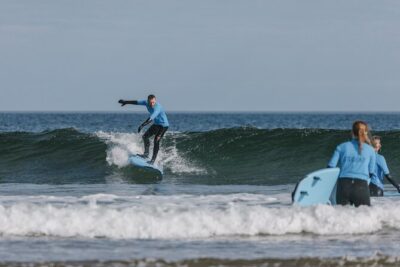


Private Highland whisky tour from Edinburgh- Build your own tour!
Read our review →
Browse the lists this tour appears in