Reviewed · EDINBURGH TOURS
Distill a Bottle of Rum on mini copper stills
The best part of this Edinburgh activity is that you do not just taste rum, you make a bottle of your own. In a cosy micro-distillery room beneath a traditional pub, you choose up to 10 botanicals, run a mini copper still, then take home 500ml of your finished drink.
I like the small size, which gives you time to ask questions and shape your recipe without being lost in a crowd. I also like the generous rhythm of the afternoon: arrival drink, three rum samples, recipe building, a cocktail while the still works, then bottling and wax sealing. The main catch is simple: this is a boozy three-hour session, so it suits rum fans more than anyone seeking a broad Edinburgh sightseeing tour.
Key points at a glance
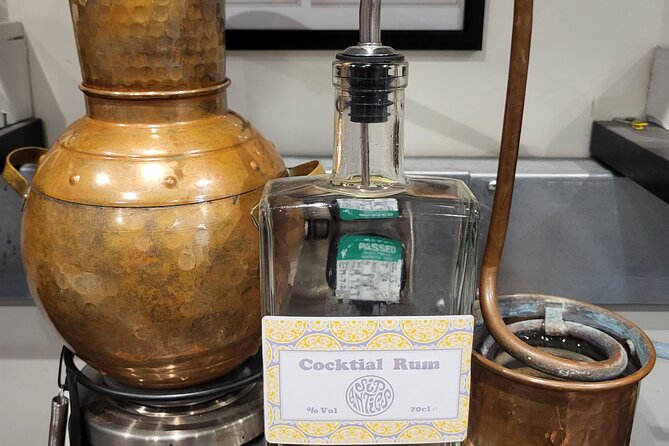
- Make your own 500ml bottle: Use an individual mini copper still and leave with your labelled, named, wax-sealed rum.
- Choose up to 10 botanicals: Build a recipe from fruits, herbs, spices, and other available ingredients.
- Small-group setting: The activity is listed for no more than three people, allowing plenty of direct help.
- Meet Gary or Neil: Both hosts are praised for their relaxed manner, humour, and clear explanations.
- Includes several drinks: You receive a rum mixer on arrival, three tasting samples, and a cocktail during distillation.
- Central Edinburgh meeting point: Start at The Cumberland Bar on Cumberland Street, with the activity ending back there.
What happens inside Sip Antics
Your afternoon begins at The Cumberland Bar, 1-3 Cumberland Street, Edinburgh EH3 6RT. The activity starts at noon and takes place in a bespoke distillery room associated with Sip Antics, in the basement of the old-fashioned pub.
That setting matters. This is not a large visitor centre with a conveyor-belt feel. The room is described as cosy, relaxed, and friendly, which suits the hands-on nature of the class. You are there to talk, smell, taste, decide, and make something. The compact space also keeps the focus on the stills and the ingredients rather than on Edinburgh sightseeing.
After you settle in, you receive a rum and mixer. The host explains the plan for the session before the tasting begins. Gary is one of the hosts, and Neil also leads sessions. Both are described as easy to talk to, with a knack for making beginners comfortable. That is useful here because rum making can sound technical at first, especially if you have never considered how flavours are built.
The opening explanation gives the class a clear shape. You are not simply handed a list of ingredients and told to experiment. You first taste several rums, learn about flavour profiles, then make choices with a better sense of what might work together.
More things to do in Edinburgh:
- The World Famous Underground Ghost Tour
★ 4.5 · 9,272 reviews - Underground Vaults Walking Tour in Edinburgh Old Town
★ 4.5 · 8,506 reviews - Loch Ness, Scottish Highlands, Glencoe and Pitlochry Tour
★ 5.0 · 6,854 reviews
Three rum samples before you build a recipe
The tasting includes three different rum samples. This is more than a warm-up drink. It gives you a practical comparison between styles and helps you think about the sort of bottle you want to create.
You may find that one sample points you toward fruit, another toward spice, and another toward a more herbal profile. The supplied details specifically mention fruits, herbs, and spices among the ingredients, so the tasting is a useful bridge between theory and action.
I like this order. If you chose botanicals before tasting anything, you might select ingredients because they smell good on their own, only to find that they do not suit the base spirit together. The host can guide you through that decision, and Gary is especially praised for having a good nose for combinations.
You should still expect a personal experiment rather than a polished commercial rum. The point is not to reproduce a famous brand. It is to make a flavour profile that belongs to you, with all the pleasant unpredictability that brings.
Choosing up to 10 botanicals
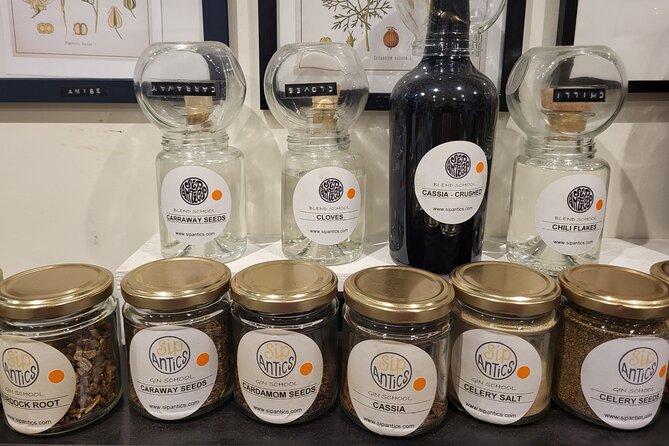
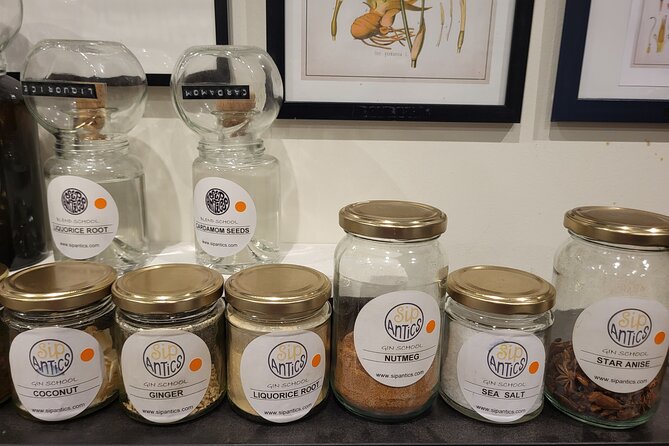
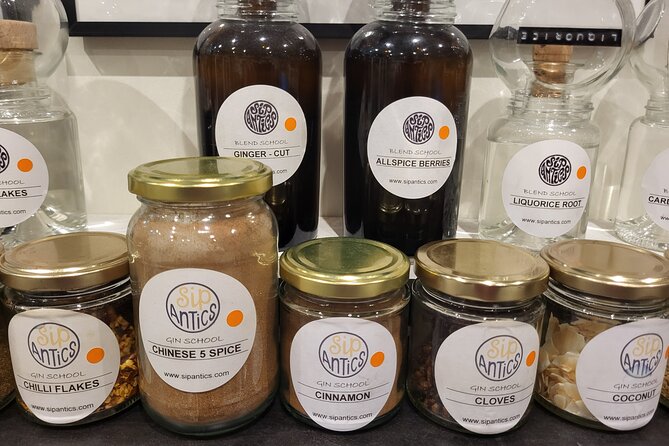
Once you understand the basic flavour options, you design your own recipe. You can choose as many as 10 botanicals from the available selection.
This is the heart of the activity. You get to smell the herbs and spices, compare options, and decide how bold or restrained your bottle should be. The choice is yours, but the host remains nearby to answer questions and help you think through the balance.
That guidance is particularly useful for first-timers. The session welcomes people who may ask very basic questions, and the hosts are described as happy to explain the process in detail. You do not need to arrive with a working knowledge of distillation or a carefully planned recipe.
The ingredient selection also makes this a good activity for couples, friends, or family members who enjoy making decisions together. You can compare ideas, argue cheerfully over the final botanical, and end up with a bottle that reflects the group. One pair created a Christmas rum, while another group made a Christmas gin during a related session.
The exact available botanicals can vary, so you should not book expecting a particular fruit or spice. The useful promise is the freedom to build a custom recipe from the ingredients on hand, not a fixed menu.
Your own mini copper still
After choosing your ingredients, you use an individual mini copper still. This is the part that turns the class from a tasting into a practical workshop.
The still is small enough for each participant to have a personal role. You are not standing at the back while someone else handles the equipment. You choose the ingredients, work with your own still, and produce a 500ml, or 50cl, bottle to take home.
The host explains the distillation process as you work. The details supplied for the activity do not promise that you will operate every part of the equipment without supervision, so think of this as a guided practical session rather than a professional distiller training course. You get to take part in the process while having help close at hand.
As the rum distills, the pace changes. This is when you enjoy a cocktail and continue chatting with the host and the other people in the room. The pause keeps the afternoon from feeling rushed. It also gives you time to compare notes about the recipes and consider what your final drink may taste like.
The finished result is measured for proof before bottling. That detail adds a useful piece of information to the process, showing that the final drink is not simply poured into a bottle without checking it.
Same base, a completely different sort of day:
- Loch Ness & Highlands Small-Group Tour from Edinburgh with Cruise
★ 4.5 · 6,022 reviews - Edinburgh Castle: Guided Walking Tour with Entry Ticket
★ 5.0 · 5,540 reviews - Edinburgh Castle Guided Walking Tour in English
★ 5.0 · 5,214 reviews - Edinburgh: Glenfinnan Viaduct, Glencoe & Fort William
★ 5.0 · 4,337 reviews
Bottling, naming, and wax sealing
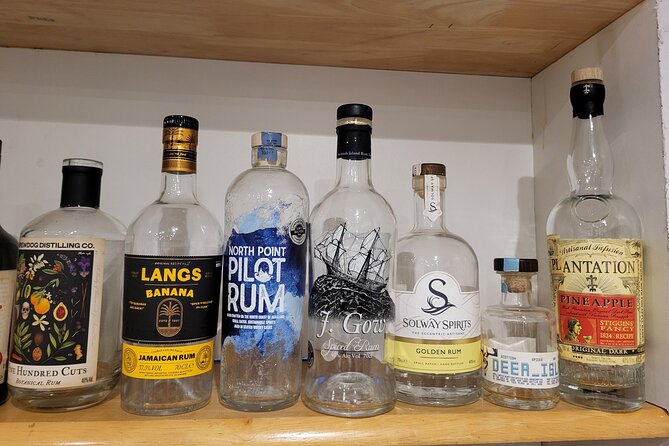
Once the rum has been distilled, you taste it before the final bottling. This is a valuable moment because you can compare your expectation with the actual result.
You then bottle 500ml, label it, give it a name, and finish it with a wax seal. That last stage gives the activity a satisfying end point. You leave with an actual object, not just a memory and a few tasting notes.
The bottle also makes this a strong gift experience. Someone can receive the class as a birthday present, attend with a friend, and return home with a drink made during the afternoon. You can also give the finished bottle to someone else, though the personal label and recipe make it feel more meaningful when you keep it.
A little patience may be worthwhile after the class. Several people planned to let their rum sit for a few weeks before opening it with family. The supplied information does not set an official ageing period, so treat that as a personal choice rather than a rule. The bottle is yours to take away once it has been sealed.
Why the small group matters
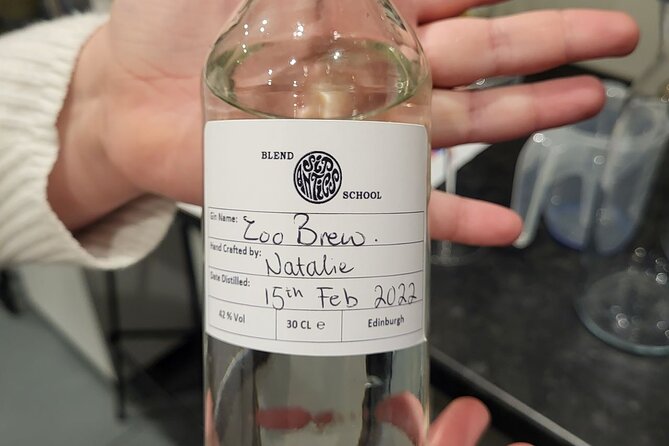
The activity is listed for a maximum of three people. That is one of its strongest practical features.
A tiny group gives you more opportunity to ask about the rums, botanicals, and distillation process. It also means your choices receive attention. If you are unsure whether two ingredients will work together, you can ask before committing instead of waiting for the host to finish with a large group.
The small setting should also suit people who are a little shy about asking beginner questions. The hosts are described as friendly and relaxed, and that matters in an activity where some people may know far more about rum than others.
There is one point to check before booking: one comment refers to a group of up to six. The current tour information specifies no more than three people, so use three as the reliable planning figure and confirm directly if your party is larger.
The hosts, Gary and Neil
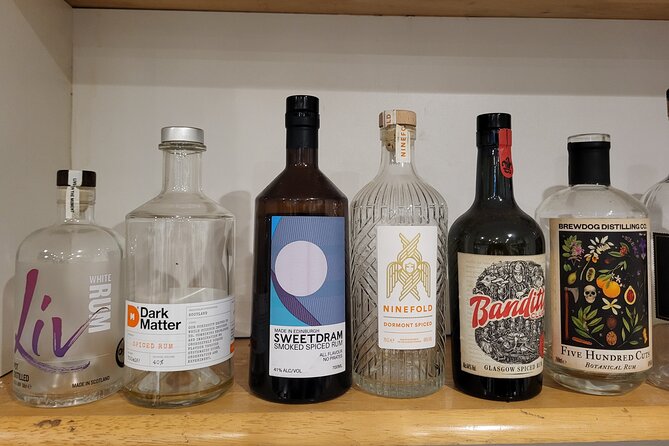
The tone of the host can make or break a class like this. You spend around three hours in one room, tasting drinks and making decisions, so a stiff or hurried presentation would take much of the fun away.
Gary is repeatedly singled out for his humour, warmth, and ability to explain rum, gin, herbs, and spices in clear detail. His Irish charm is part of the relaxed atmosphere. Neil also receives strong praise for being enthusiastic and for going out of his way to look after the people in his sessions.
You should expect conversation rather than a formal lecture. The hosts explain the outline, answer questions, and help you understand how ingredients affect flavour. That makes the class suitable for a rum fan who wants more context, as well as for someone who simply enjoys a social afternoon built around drinks.
The host’s role is also important when you choose botanicals. A large ingredient selection can be exciting, but it can also be confusing. The guidance helps you avoid treating every available option as essential. Ten botanicals is a maximum, not a target you must reach.
Is the $123.40 price good value?
At $123.40 per person, this is not a cheap tasting flight. You are paying for about three hours, a rum mixer, three samples, a cocktail, personal use of a mini copper still, instruction, and a 500ml bottle to take home.
The value depends on what you want from an afternoon in Edinburgh. If you only want to taste rum, a bar will cost less and give you more choice. If you want a souvenir, a bottle bought from a shop will also be cheaper. The difference here is the making process, the one-to-one attention, and the personal finish with your own name and wax seal.
I think the price makes better sense as a gift or a special outing than as an everyday drink purchase. The finished bottle is part of the value, but so are the decisions that lead to it. You are buying a social workshop and a keepsake, not just 500ml of rum.
The activity is often booked well ahead, with an average booking time of 41 days in advance. That suggests you should plan early, especially if you need a particular date or want to give it as a birthday present.
Who should book this rum class?
This suits you if you like rum, enjoy tasting different flavours, or prefer activities where you make something rather than only look at something. It also works well for friends and couples who enjoy a little drink-fuelled creativity.
I would recommend it for:
- Rum fans who want to understand flavour choices
- Couples or friends looking for an unusual Edinburgh afternoon
- Birthday or celebration gifts
- People interested in herbs, spices, and drink making
- Beginners who want a relaxed introduction to distillation
It is less suitable if you do not drink alcohol, dislike tasting several strong drinks, or want a full city tour. There is no sightseeing itinerary beyond the central meeting point and the pub setting. The class is about rum from start to finish.
You should also tell the provider about any allergies before arriving. Botanicals are central to the activity, so that information matters. Service animals are allowed, and the meeting point is near public transport.
Timing, cancellation, and practical details
The class starts at 12:00 pm and lasts about three hours. It ends back at the meeting point, so you do not need to arrange a separate return route from another part of Edinburgh.
The ticket is mobile and the session is offered in English. Confirmation is provided when you book. Since the activity involves several drinks, plan your wider day with a little care rather than scheduling a demanding attraction immediately afterward.
Free cancellation is available up to 24 hours before the start time for a full refund. Changes or cancellations made less than 24 hours before the activity are not accepted under the stated policy.
Should you book it?
Book this if you want an Edinburgh activity with a real result at the end. The strongest features are the tiny group, the chance to choose your own botanicals, the individual mini still, and the warm hosting from Gary or Neil.
The main question is value. At $123.40, you should want more than a drink. You should want the story of how it was made, the fun of choosing a recipe, and a personal bottle to open later. If that sounds like your kind of afternoon, this is a smart pick for a gift or a memorable day with a friend. If you simply want a cheap rum tasting, spend less at a bar and skip the still.
FAQ
Where does the rum-making activity start?
It starts at The Cumberland Bar, 1-3 Cumberland Street, Edinburgh EH3 6RT, UK.
What time does the activity start?
The scheduled start time is 12:00 pm.
How long does the rum-making class last?
The activity lasts approximately three hours.
How much rum do I take home?
You take home a 500ml, or 50cl, bottle of the rum you distill.
How many botanicals can I choose?
You can choose up to 10 botanicals for your custom recipe.
How large is the group?
The stated maximum is three people.
Can I cancel for a full refund?
Yes. You can cancel at least 24 hours before the start time for a full refund. Cancellations or changes made less than 24 hours before the activity are not accepted.
Just added around Edinburgh
- Blackness Castle Cruise★ 4.5 · 39 reviews
- Half Day Sailing Trip★ 5.0 · 11 reviews
- Private South Queensferry Town Walking Tour★ 5.0 · 3 reviews
- Edinburgh Shore Excursion with a Local Guide: 100% Personalized & Private★ 4.0 · 7 reviews
- Full Day Sailing Trip★ 5.0 · 10 reviews
- Edinburgh Shore Excursion: City Tour and Royal Yacht Britannia★ 4.0 · 41 reviews
- Edinburgh: West Highlands Privately Guided Day Tour in Luxury MPV★ 5.0 · 10 reviews
- Whisky Tasting at Edinburgh’s Award Winning Whiski Rooms★ 5.0 · 5 reviews
Edinburgh Tours, compared.
Underground Vaults Walking Tour in Edinburgh Old Town
Read our review →
Loch Ness, Scottish Highlands, Glencoe and Pitlochry Tour
Read our review →
Loch Ness & Highlands Small-Group Tour from Edinburgh with Cruise
Read our review →
Edinburgh Castle: Guided Walking Tour with Entry Ticket
Read our review →
Edinburgh Castle Guided Walking Tour in English
Read our review →