
Reviewed · HISTORICAL TOURS
Medical and Surgical History of Edinburgh – Private Walking Tour
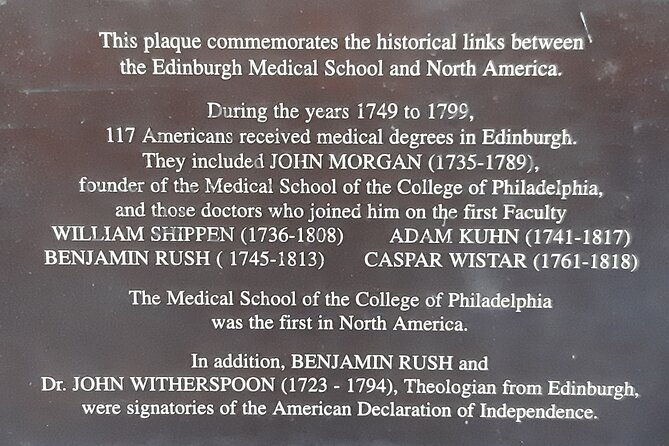
Edinburgh’s medical story is written into its closes, old hospitals, lecture rooms, and grand university buildings. This private walk follows that story from Hunter Square to the former Royal Infirmary, linking the city’s rise as a medical centre with the hard work, odd customs, and social battles behind it.
I like the route’s strong sense of place, especially the way it connects the small early teaching hospital known as The Little House with the much larger Royal Infirmary. I also like having a guide with a medical background. Moray, also addressed as Dr. Grigor in tour comments, can connect old medical practice with modern healthcare in a way that a standard city walk may not.
The main drawback is physical rather than intellectual: you cover about 2.5 miles on foot, with some uneven or tiring city walking. The tour is not a good choice if you have chronic or painful musculoskeletal problems.
Key points to know before booking
- Edinburgh’s medical story unfolds street by street, from the Royal Mile and Cowgate to the old infirmary buildings.
- Moray leads the walk, and is also addressed as Dr. Grigor in tour comments, bringing a physician’s personal perspective.
- The route lasts about 3 to 4 hours and may run slightly longer, so keep the rest of your afternoon flexible.
- A cafe stop is built in, but coffee, tea, food, and other drinks cost extra.
- This is a private walk, so only your own group takes part.
- The route ends at the former Royal Infirmary, now Edinburgh University’s Futures Institute, rather than returning to the starting point.
Why Edinburgh is such a good place for medical history

Edinburgh can feel like a city of castles, churches, and literary names. Look closer, and it is also a city shaped by doctors, surgeons, medical students, hospitals, and arguments over who was allowed to study.
This tour gives that story a physical route. You do not simply hear dates in a room. You walk along the Royal Mile, turn into old closes, pass former teaching sites, and finish at one of the city’s most imposing medical buildings. The changing scale matters. Early medical teaching took place in cramped quarters, while later institutions needed large lecture halls, hospitals, and purpose-built schools.
I like this kind of tour because it gives you a second Edinburgh to notice during the rest of your visit. Afterward, an old close is not just a shortcut. A university building is not just a handsome facade. It may mark a dispute over medical training, a breakthrough in surgery, or the daily grind of students who had to earn their place.
The subject is specialized, but you do not need a medical background. The focus includes social history, education, professional life, and the city’s development as a centre for medicine. That makes it suitable for curious general sightseers as well as people working in healthcare.
More History Tours in Edinburgh
- Old Town Walking Tour History and Tales in Edinburgh
★ 5.0 · 2,168 reviews - Old Town Historical and Underground Tour
★ 5.0 · 1,574 reviews - Multi-Sensory Small-Group Historic Vaults Tour in Edinburgh
★ 4.5 · 1,384 reviews
Starting on the Royal Mile at Hunter Square
The walk begins at Hunter Square, close to the Royal Mile. This is a practical starting point because you are already in the heart of Edinburgh’s old town, near major bus routes and other city sights.
The first section takes about 45 minutes. You follow Edinburgh’s oldest street while learning how medical and surgical institutions began to take shape. One of the early highlights is the alleyway connected with the beginnings of the College of Physicians.
This opening works best if you pay attention to the small spaces. The story is not presented as a parade of famous names alone. It is about where people taught, met, trained, and built professional authority. The Royal Mile provides the setting, but the real subject is how medicine became organized in Edinburgh.
The walk also gives you time to get used to the guide’s approach. Moray is described as warm, enthusiastic, and able to keep the pace moving while making room for conversation. If your group has questions about healthcare, medical education, or the history of the profession, the private format should make it easier to ask them as you go.
Cowgate and Edinburgh’s first teaching hospital
The route then drops toward the Cowgate, where you locate Robertson’s Close and the site of The Little House. This was Edinburgh’s first teaching hospital, a small beginning compared with the major medical institutions that followed.
The stop lasts about an hour and includes the complex connected with the first Royal Infirmary of Edinburgh. This is likely the most substantial historical section of the walk because it shows how medical teaching and patient care moved from limited quarters into a formal hospital setting.
I find this part particularly useful for understanding scale. The name Royal Infirmary may sound familiar and grand, but the story begins with practical problems: where to teach, where to treat patients, and how to train enough doctors and surgeons for a growing medical centre. The buildings and closes help make those changes easier to picture.
The Cowgate area can involve slopes and uneven walking, so comfortable shoes are sensible. You do not need hiking gear, but this is not a flat, effortless stroll. The route covers about 2.5 miles overall, and the physical demand adds up over several hours.
Surgeons’ Hall and the fight for women’s medical education
The next major stop is Surgeons’ Hall Museums, the historic home of the surgical profession. The tour includes a refreshment break here, which arrives at a useful point in the walk.
Food and drink are not included, so plan to buy your own coffee, tea, or snack. This is a small cost, but it is worth knowing before you arrive. Since the entire tour can take three to four hours, a pause helps you stay attentive during the later sections.
Surgeons’ Hall is also where the tour turns to the long struggle for women to enter medical education. This gives the walk a wider social purpose. You are not hearing only about surgical techniques or celebrated male doctors. You are also hearing about who was excluded, how professional institutions resisted change, and how women fought for access.
That subject gives the tour some emotional weight without requiring a museum visit. One important practical point: the walk discusses Surgeons’ Hall Museums but does not include a museum tour. If you want to see the collections inside, you will need to arrange that separately and allow additional time.
The stop is planned for about 45 minutes, though the total tour may run longer depending on questions and conversation. One person who took the walk described it as lasting more than four hours, so I would avoid booking a tight appointment immediately afterward.
More Walking Tours in Edinburgh
- Underground Vaults Walking Tour in Edinburgh Old Town
★ 4.5 · 8,506 reviews - Edinburgh Castle: Guided Walking Tour with Entry Ticket
★ 5.0 · 5,540 reviews - Edinburgh Castle Guided Walking Tour in English
★ 5.0 · 5,214 reviews - Edinburgh Darkside Walking Tour: Mysteries, Murder and Legends
★ 5.0 · 3,862 reviews
The University of Edinburgh and the student experience
At the University of Edinburgh, you hear more about the medical school’s former home and the city’s growing importance in medicine. The scheduled section is shorter, around 20 minutes, but its subject is central: medical education was not just about grand buildings and famous physicians.
You also hear about the work and rewards of student life. The phrase drudgery is important here. Medical training demanded time, stamina, and discipline, and students had to endure plenty of routine work before gaining professional status.
This is one of the tour’s strongest features for anyone connected with healthcare. The stories place medical careers in human terms. Instead of presenting doctors and surgeons as distant figures in a timeline, the walk considers what it meant to study, train, compete, and build a career in Edinburgh.
The private format is useful here. A group interested in medical education can ask more specific questions, while a family group can keep the discussion at a broader social level. The guide’s medical background adds a personal perspective, but you should still expect a history walk rather than a clinical lecture.
Bristo Place, Darwin’s lodgings, and the 1880s medical school
The route continues through Bristo Place, passing the site of Charles Darwin’s former student lodgings. Darwin is best known for his later scientific work, but seeing where he lived as a medical student gives you a more grounded view of his early years.
The walk then reaches the imposing 1880s Medical School and graduation hall. This transition is visually useful. You move from modest early teaching spaces and old closes toward formal buildings designed to project the status of medical education.
The section takes around 25 minutes. It is not just an architectural pause. The buildings help show how Edinburgh’s medical institutions gained confidence and public importance. The city’s medical identity was being built through training, professional organization, hospital care, and purpose-built facilities.
If you are interested in architecture, this section adds another layer to the walk. If you are mainly interested in social history, the buildings still provide evidence of changing priorities. Institutions invested in spaces that could train more students and give medicine a stronger public profile.
Lauriston Place and the former Royal Infirmary
The final stop is at Lauriston Place, in the grand front courtyard of the former Royal Infirmary. The building is now associated with Edinburgh University’s Futures Institute, and it provides an impressive finish to the route.
The closing section lasts around 15 minutes and focuses on major doctors and surgeons connected with the institution. By this point, you have followed the story from the first small teaching hospital to a large, formal medical complex.
Ending here rather than returning to Hunter Square is both a strength and a planning issue. The destination gives the tour a proper sense of arrival, but you need to arrange your next move from Lauriston Place. The end point is at Edinburgh Futures Institute, 1 Lauriston Place, Edinburgh EH3 9EF.
I like the ending because it completes the story through place. You do not finish with an abstract summary. You finish in front of a building that represents the scale and authority Edinburgh’s medical institutions eventually reached.
What the private format adds
At $130.44 per person, this is not a budget city walk. Its value depends on how much you want a focused subject and personal conversation rather than a broad introduction to Edinburgh.
The price makes more sense for a small group that shares an interest in medicine, surgery, social history, or university life. You are paying for three to four hours of guiding, a specialist route, and the ability to shape the discussion around your group. Group discounts may also improve the cost for larger private parties.
The tour does not include admission tickets to attractions, and all listed stops are visited from the outside or as part of the walking route. The cafe break is also self-funded. That keeps extra costs fairly clear, but you should not think of the price as covering museum entry or refreshments.
The private setup is a real benefit. You are not trying to hear a guide over a large crowd, and you can ask questions without holding up strangers. It also lets the guide adjust the conversation. A family group, medical students, retired healthcare workers, and history enthusiasts may all get something different from the same route.
Pace, weather, and practical comfort
Plan on three to four hours, with a chance that the walk may run beyond that if the conversation becomes lively. The route is about 2.5 miles, but distance alone does not tell the whole story. Edinburgh’s old town includes slopes, steps, and uneven surfaces, and you should wear comfortable shoes.
A moderate level of physical fitness is advised. If you have a chronic or painful musculoskeletal condition, this tour is not recommended. Service animals are allowed, and the route is near public transportation.
The tour requires good weather. If poor weather forces cancellation, you are offered another date or a full refund. You can also cancel for a full refund up to 24 hours before the start time. Confirmation is sent within 48 hours of booking, subject to availability.
The listed operating window runs from 8:00 a.m. to 2:00 p.m., Monday through Sunday, with the date range shown through February 16, 2027. Check the available start time carefully, since the walk’s length can take up much of your day.
Who should book this Edinburgh walk
I would choose this tour if you want a serious subject presented through real streets and buildings. It suits healthcare workers, medical students, people interested in women’s education, university history, and anyone who has already seen Edinburgh’s major headline sights.
It is also a good choice if you prefer conversation to a fixed audio script. Moray is described as entertaining, approachable, and willing to talk about both medicine and healthcare. That personal angle is one of the tour’s strongest assets.
I would skip it if you want a quick overview of Edinburgh, an indoor museum visit, or a relaxed stroll with little walking. I would also avoid putting a major timed activity immediately afterward. The route is thoughtful and well paced, but it asks for several hours and a reasonable level of stamina.
Should you book the Medical and Surgical History of Edinburgh tour?
Book it if the subject genuinely interests you and you want Edinburgh’s medical past explained on the ground, not just in a display case. The route covers early teaching hospitals, Surgeons’ Hall, women’s access to medical education, Darwin’s student years, the university, and the former Royal Infirmary.
At $130.44 per person, it is best value for a private group that will ask questions and make use of the guide’s medical perspective. Bring comfortable shoes, budget for a cafe stop, and leave your afternoon open. If you do that, this can give you a thoughtful second look at Edinburgh, one shaped by hospitals, classrooms, ambition, and hard-won professional change.
FAQ
How long does the tour last?
The tour takes approximately three to four hours. It may last longer if the group has an extended discussion.
How far do you walk?
The route covers approximately 2.5 miles.
Where does the tour start?
The meeting point is Hunter Square, Edinburgh EH1, near the Royal Mile.
Where does the tour finish?
The tour ends at Edinburgh Futures Institute, University of Edinburgh, 1 Lauriston Place, Edinburgh EH3 9EF. The building was formerly the Royal Infirmary of Edinburgh.
Is this a private tour?
Yes. Only your own group participates in the activity.
Is food or drink included?
No. The tour includes a cafe refreshment stop, but coffee, tea, food, and other drinks are not included.
Does the tour enter Surgeons’ Hall Museums?
The route visits the historic home of the surgical profession and includes discussion there, but a museum tour is not included.
Is the walk suitable for people with mobility problems?
A moderate physical fitness level is recommended. Because the route is approximately 2.5 miles, it is not recommended for people with chronic or painful musculoskeletal conditions.
What happens if the weather is poor?
The tour requires good weather. If it is canceled because of poor weather, you can choose another date or receive a full refund.
Just added around Edinburgh
- Half Day Sailing Trip★ 5.0 · 11 reviews
- Private South Queensferry Town Walking Tour★ 5.0 · 3 reviews
- Blackness Castle Cruise★ 4.5 · 39 reviews
- Edinburgh Shore Excursion with a Local Guide: 100% Personalized & Private★ 4.0 · 7 reviews
- Full Day Sailing Trip★ 5.0 · 10 reviews
- Edinburgh Shore Excursion: City Tour and Royal Yacht Britannia★ 4.0 · 41 reviews
- Whisky Tasting at Edinburgh’s Award Winning Whiski Rooms★ 5.0 · 5 reviews
- Edinburgh: West Highlands Privately Guided Day Tour in Luxury MPV★ 5.0 · 10 reviews
Historical Tours, compared.
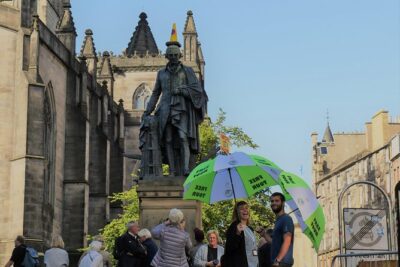
Old Town Walking Tour History and Tales in Edinburgh
Read our review →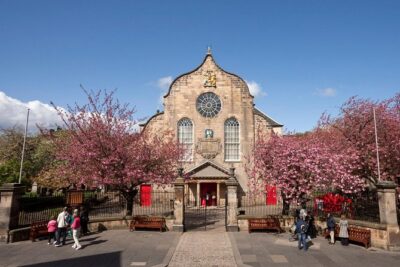

Multi-Sensory Small-Group Historic Vaults Tour in Edinburgh
Read our review →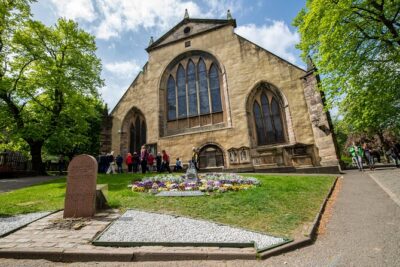
Edinburgh Old Town: Historical Guided Walking Tour
Read our review →


Browse the lists this tour appears in