
Reviewed · CITY TOURS
Merchant City Music Walking Tour of Glasgow
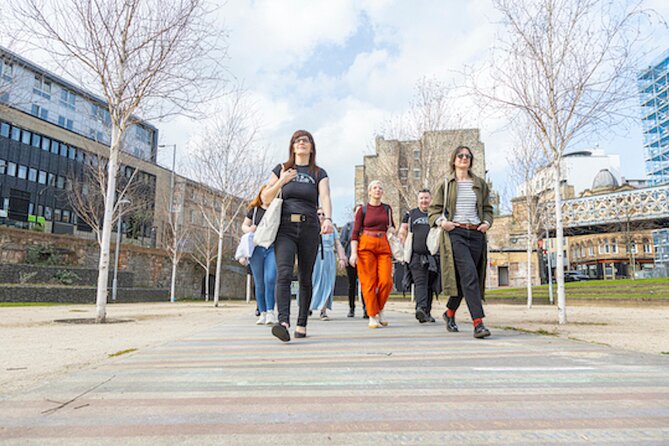
Glasgow’s music story is best understood on foot, and this two-hour walk takes you from a beloved Clydeside pub to the Barrowland Ballroom and the venues around King Street. Along the way, you’ll hear how local places shaped punk, folk, rock, and the city’s own musical character. Guides such as Fiona, an arts journalist, and Phil, also known as P6, bring personal interest and solid local knowledge.
I like the unusual route, which gets you away from Glasgow’s standard sightseeing circuit. I also like the mix of famous names and overlooked places, from David Bowie and Bob Dylan to the old Britannia Panopticon and the striking artwork beside Barrowland. The possible catch is simple: this is an outdoor walking tour in all weather, and access to the Panopticon may not be available.
Key points to know
- The Clutha starts the story: Begin at one of Glasgow’s best-loved live music pubs, decorated with murals about the city’s performers.
- The Panopticon adds theater and oddball charm: Britain’s oldest surviving music hall is a major part of the walk, though entry may not be possible.
- Barrowland is the musical centerpiece: Hear stories about the bands, concerts, and local culture tied to Glasgow’s most famous ballroom.
- Guides bring different strengths: Fiona works as an arts journalist, while Phil, also called P6, is praised for his passion and broad knowledge of Glasgow.
- The tour ends among music institutions: King Street, The 13th Note, Mono Bar, and Postcard Records help explain Glasgow’s distinctive music scene.
- The price includes a useful extra: At $27.08 per person, you also receive a voucher for 20% off food at Mono Cafe Bar.
Why Glasgow’s music belongs on a walking route
Glasgow can look like a city of grand civic buildings, shopping streets, and handsome Victorian architecture. But much of its identity comes from what happened inside pubs, dance halls, theaters, churches, and small clubs. This tour connects those places in a way that a general city walk cannot.
You are not simply being taken past buildings. You are shown how venues helped shape the sound of the city, how musicians became part of Glasgow’s public life, and why local audiences have such a strong connection to live performance. The guide also adds ordinary city detail, so the tour is about Glasgow itself as much as its bands.
The pace is designed for easy walking, with a listed duration of about two hours and one comfort break along the way. The group can include up to 26 people, so it is not a private stroll, but that limit keeps it smaller than a large coach-style outing. You should still expect to walk and listen outdoors for much of the morning.
The meeting point is the Clutha and Victoria Bar at 159 Bridgegate. The tour begins at 11:00 a.m., and you should arrive about 10 minutes early. It ends on King Street, which is useful if you want to continue exploring the city center or stop for food at Mono Cafe Bar.
More City Tours in Glasgow
- City Sightseeing Glasgow Hop-On Hop-Off Bus Tour
★ 4.5 · 1,873 reviews - Glasgow City Centre Walking Tour with Local Guide
★ 5.0 · 1,326 reviews - Glasgow City and Clyde Bridges Bike Tour
★ 5.0 · 91 reviews
Starting at The Clutha and Victoria Bar
The Clutha is a fitting starting point. This Clydeside pub is closely tied to Glasgow’s live music culture, and its exterior murals show performers and styles from across the city’s musical past. The stop lasts about 10 minutes, long enough to get oriented and begin seeing the city through a music-first lens.
I like this opening because it makes the subject feel local right away. You start with a working music pub rather than a grand monument. The murals also give you something concrete to look at while the guide explains how varied Glasgow’s scene has been over the years.
There is no admission charge at any of the listed stops, but that does not mean every location functions like a conventional museum visit. Much of the value comes from the guide’s explanation, the stories connected to the buildings, and the way the stops fit together.
The Panopticon’s strange theatrical past

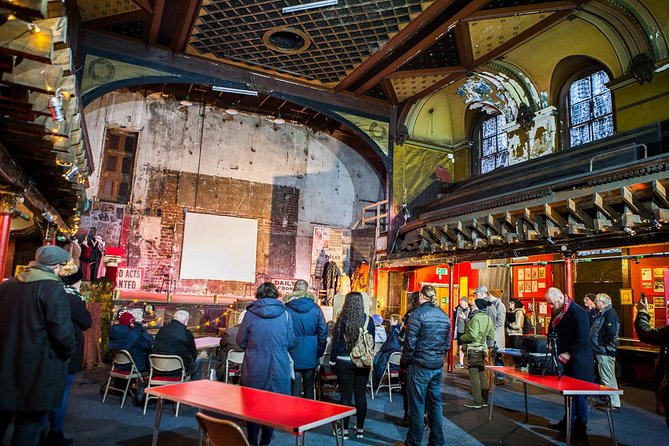
The Britannia Panopticon Music Hall is one of the most unusual stops. It is described as Britain’s oldest surviving music hall and is still a working venue. Its stage has been linked with Scottish performer Harry Lauder, as well as figures such as Cary Grant and Stan Laurel.
The building’s atmosphere is a big part of its appeal. Music halls were places for comedy, song, variety acts, and popular entertainment, so this stop broadens the tour beyond modern rock. It shows that Glasgow’s performance culture did not begin with guitars and amplifiers.
At the time covered by this experience, access inside the Panopticon may not be available because of Covid-related restrictions. The guide can still tell its stories from outside, but you should not book this tour expecting a guaranteed interior visit. That limitation matters if the Panopticon is your main reason for choosing the walk.
The stop lasts about 20 minutes, making it one of the more substantial sections of the morning. It is a good place to ask your guide about the relationship between old music halls and the later club and concert scenes.
City Halls, the Old Fruitmarket, and a punk-era shock
The walk continues to City Halls and the Old Fruitmarket, two important performance spaces with very different architectural character. Together, they have hosted memorable concerts, including a Stranglers performance associated with the decision to ban punk rock in Glasgow.
That story gives the tour some edge. It shows that music is not only entertainment. It can challenge local authorities, unsettle established ideas, and force a city to decide what it wants its public culture to be.
The stop lasts around 10 minutes. You will not spend the morning inside concert halls listening to performances, so think of this as a guided look at the venues and the events connected to them. The reward is context: you learn why a building matters, not just what it looks like.
For anyone interested in punk, this may be one of the most memorable sections. For people mainly interested in traditional Scottish music, it still helps explain the changing mood of Glasgow’s cultural life.
More Walking Tours in Glasgow
- Glasgow Street Art Daily Walking Tour: 2pm
★ 5.0 · 648 reviews - Gander Walking Tours in Glasgow
★ 5.0 · 506 reviews - Gothic Glasgow Walking Tour
★ 5.0 · 448 reviews - Glencoe, Scenic Walk & Highlands Guided Tour starting Glasgow
★ 5.0 · 121 reviews
The Tron Theatre and a darker old story
The Tron Theatre is a short five-minute stop, but it adds another layer to the route. Today it is a leading theater and concert venue. Its earlier story includes a devastating encounter with the notorious Hellfire Club.
The tour does not treat Glasgow’s music as a neat line from one successful band to the next. Stops like the Tron remind you that performance spaces often have complicated pasts. Religious buildings, theaters, clubs, and public halls have all been reused and reshaped over time.
Because this is a brief stop, do not expect a long visit inside. Its purpose is to connect the building’s older identity with its current role as a place for theater and music.
Barrowland Ballroom, Glasgow’s essential music stop

The Barrowland Ballroom is the heart of the walk. Its name carries real weight among Glasgow concertgoers, and its history is as colorful as the acts that have played there. The tour spends about 10 minutes at the ballroom itself, then another 15 minutes in Barrowland Park.
That extra time matters. The building is only part of the story. The surrounding pathway artwork highlights performers associated with the venue, giving you a useful visual record of its place in the city’s music culture.
Your guide may discuss artists ranging from The Smiths and Simple Minds to David Bowie and Bob Dylan. The point is not simply to list famous performers. It is to show how a venue in Glasgow became part of the wider story of touring music.
The Barrowland section also makes good photo material. One of the strongest practical points from the experience is that you are not walking through a featureless series of streets. There are murals, venue fronts, public artworks, and distinctive buildings along the way.
If you are booking mainly for one famous concert venue, this is likely the portion you will value most. If you are not familiar with the bands mentioned, the guide can still place Barrowland within Glasgow’s wider social and cultural life.
St Andrews in the Square and the move from church to concert hall

St Andrews in the Square is a beautiful 18th-century church that has been turned into a live music venue. The stop lasts about five minutes, so it is a quick look rather than an extended visit.
Its importance comes from the contrast between the building’s original purpose and its current use. Glasgow has repeatedly found new life for old spaces, and St Andrews shows how a former church can become part of the city’s cultural circuit.
The stop also connects music with Scotland’s broader cultural story. Your guide can explain the links between the building and major Scottish figures, adding useful background even if your main interest is modern music.
Ending around The 13th Note and King Street
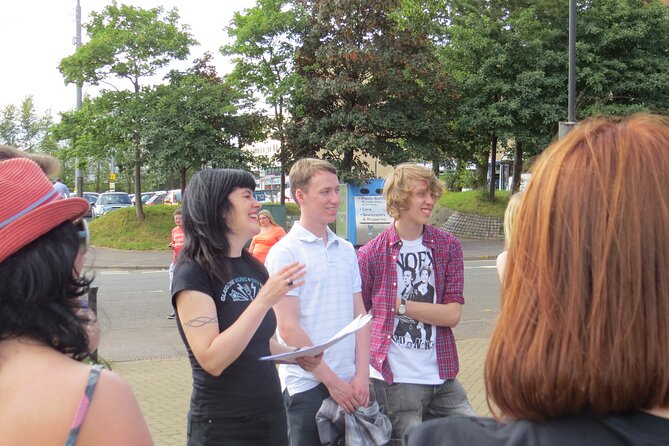
The final stop is The 13th Note, in the King Street area. This is where the guide explains theories about why Glasgow developed such a distinctive music scene. The answer is not reduced to one band, one venue, or one record label.
The area is tied to Postcard Records, The 13th Note, and Mono Bar. These names help you move from large historic venues to smaller places where newer sounds and independent music gained support. The ending gives the tour a modern direction rather than leaving you with only stories about past performers.
The tour finishes on King Street, and the food discount at Mono Cafe Bar is a practical bonus. You receive 20% off food there, though drinks and food are not included in the tour price itself. If you want to keep talking about music over lunch, this makes the finish convenient.
I also like the structure of this ending. You finish with a question about why Glasgow became musically distinctive, not with a simple final building and goodbye. That gives you something to think about as you continue through the city.
Guides who make the difference

This experience depends heavily on the guide. Fiona is an arts journalist with a strong interest in Glasgow and its musicians. Phil, also referred to as P6, brings energy and passion to the subject and also talks about Glasgow beyond music.
That variety is useful. An arts writer may give you a closer view of the city’s cultural life, while another guide may focus more on performance stories, venues, and the character of Glasgow itself. The experience is clearly built around local voices rather than a standard memorized script.
A practical tip: if you have a favorite band, venue, or period of Glasgow music, come ready to ask about it. The tour covers a wide span, from the Panopticon’s old variety tradition to punk, independent labels, and major international performers.
The small-group design helps here. With a maximum of 26 people, you should have a better chance of hearing the guide than you would on a much larger city walk. It is still worth staying close, especially near busy streets or outdoor stops.
Price, timing, and who gets the best value
At $27.08 per person, this is reasonably priced for a two-hour specialist walking tour. You are paying for a focused subject, several city-center locations, and a guide who can connect venues with musicians and local events. The 20% food discount at Mono Cafe Bar adds a little practical value.
The tour is not the best choice if you want paid museum entries, a concert, or a guaranteed look inside every building. The listed stops are free, and much of the experience takes place outside. Its value comes from interpretation and access to a particular side of Glasgow, not from included admissions.
The timing also works well for a morning in the city. Starting at 11:00 a.m. gives you time to reach the meeting point, and finishing around 1:00 p.m. leaves the afternoon open. Because the route ends on King Street, you can carry on with lunch or more sightseeing without returning to the starting point.
You should dress for Glasgow weather. The tour operates in all conditions, and the experience includes outdoor walking and standing. Most people can participate, service animals are allowed, and you should contact the provider ahead of time to discuss mobility concerns.
Free cancellation is available if you cancel at least 24 hours before the start time. Changes or cancellations made later are not accepted for a refund.
Who should book this Glasgow music walk
I would choose this tour if you enjoy live music, city culture, old theaters, concert venues, or local stories that do not appear on a standard sightseeing route. It is also a good pick if you already know Glasgow’s major bands and want to connect them with real places.
You do not need to be a serious music expert. The route includes architecture, social history, performance spaces, public art, and stories about Glasgow itself. The guides make the subject accessible, and the walking is described as easy.
I would hesitate only if you dislike outdoor tours in uncertain weather or need guaranteed indoor access. The Panopticon may not be open for the visit, and the tour is primarily about seeing locations and hearing their stories from the street.
Should you book the Merchant City Music Walking Tour?
Book it if you want Glasgow to make more sense through its music. The strongest parts are the local guides, The Clutha, the Panopticon stories, the Barrowland section, and the final explanation of places such as Postcard Records and The 13th Note.
The tour works especially well early in your Glasgow stay. It gives you names, venues, and neighborhoods to return to later. At $27.08, it offers a focused two hours without taking over your day.
Skip it if you are looking for a concert, extensive interior visits, or a general introduction to every major Glasgow sight. For everyone else, this is a lively, useful way to hear the city’s character in the places where its music actually happened.
FAQ
How long is the Merchant City Music Walking Tour?
The tour lasts approximately two hours and includes a comfort break.
Where does the tour start?
It starts at Clutha and Victoria Bar, 159 Bridgegate, Glasgow G1 5HZ.
What time does the tour begin?
The scheduled start time is 11:00 a.m. You should arrive at least 10 minutes before departure.
Where does the tour finish?
The tour ends on King Street in Glasgow.
Is entry to the Britannia Panopticon included?
The Panopticon stop is included, but access inside may not be available. The guide can still explain its stories and importance.
Is food included in the tour price?
Food and drinks are not included. You do receive a voucher for 20% off food at Mono Cafe Bar.
What happens if the weather is poor?
The tour operates in all weather conditions, so you should dress appropriately for outdoor walking.
Just added around Glasgow
- Ultimate Day tour Edinburgh: Glencoe, Highland Cows, Loch Lomond★ 5.0 · 10 reviews
- West of Scotland Cultural Tour★ 5.0 · 7 reviews
- The Braveheart tour from Glasgow or Edinburgh★ 5.0 · 6 reviews
- Private Tour of Glasgow Distilleries and a Loch Lomond Cruise★ 5.0 · 13 reviews
- Magicians Heist Private Escape Room in Glasgow★ 5.0 · 23 reviews
- Scottish Highlands, Lochs & Castles from Edinburgh and Glasgow★ 5.0 · 6 reviews
- Loch Ness and the Scottish Highlands from Glasgow or Edinburgh★ 5.0 · 10 reviews
- Shore Excursion to Loch Lomond & Stirling Castle★ 5.0 · 10 reviews
City Tours, compared.

City Sightseeing Edinburgh Hop-On Hop-Off Bus Tour + Kids Go Free
Read our review →
City Sightseeing Glasgow Hop-On Hop-Off Bus Tour
Read our review →
Glasgow City Centre Walking Tour with Local Guide
Read our review →
Inverness City Daily Walking Tour (11:30am, 2pm & 5pm)
Read our review →

Edinburgh City Bike Tour – Choice of E-Bike or Manual
Read our review →
Browse the lists this tour appears in